
Hair Loss in Women: Looking beyond the 'influencer' advice
Updated: May 19
Hair loss is one of those symptoms that can be anxiety-inducing, have you counting each hair that comes out in the shower, not to mention, incredibly hard to experience, especially when nothing is working.
Before you spiral into spending a small fortune on serums, supplements, scalp oils, and red-light caps, it is important to understand that not all hair loss is the same. Some forms may improve when the underlying causes are addressed, including hormonal imbalances, nutrient deficiencies, stress physiology, inflammation, thyroid health, insulin resistance, or post-viral changes.
And some changes may simply reflect genetics, ageing, hormonal transitions, or the natural evolution of the body over time.
It’s not only about the extra hairs in the shower drain. It is about:
Avoiding certain hairstyles because your scalp is showing
Wondering if other people can see your thinning part
Scrolling into the night looking for the next 'cure'
Jumping onto online forums, hoping to find the 'cure'
It can feel like your body is 'giving up' on you. For many women, hair loss brings grief, shame, anxiety and panic. And yet, most women are never given a proper explanation. We can be told 'it’s hormones', 'it’s stress', or 'it’s your age', and then gently ushered towards another product. WTH!

At the New School, and within my own clinical team, hair loss is understood differently. Your hair is not shallow; it is more of a 'readout' of your internal health: nutrients, hormones, thyroid, adrenals, gut, inflammation, and, yes, sometimes simple, honest ageing.
What is hair actually made of?
Hair is not just 'dead stuff' sitting on your head. Each strand is a little protein structure, and building hair is metabolically expensive.
Hair is mostly:
Keratin – a strong structural protein
Sulphur-rich amino acids – especially cysteine and methionine
Minerals – iron, zinc, copper, selenium, magnesium
Vitamins – A, D, E, B12, folate, biotin and other B vitamins
Healthy fats – particularly omega-3 fats to support the follicle membrane and scalp
If your body doesn’t have enough of these, it will 'de-prioritise' hair growth. Survival first, hair later.
Check out my course about the food on your plate HERE and learn the fundamentals of nutrition.
1. Under-eating and nutrient gaps

A rather large number of women simply don’t eat enough, especially when 'yo-yo' dieting has been a theme, skipping breakfast, living on caffeine, or just too busy to eat properly in a parasympathetic state of mind. After all we are in the 21st century.
Hair growth is a luxury function. When your body thinks food is scarce, it redirects nutrients to vital organs, not to hair follicles. Even when calories are technically “enough”, the quality matters. You can’t build keratin and robust follicles from cereal bars, toast and coffee, #truth.
Nutrient-dense foods your hair loves:
Grass-fed red meat – iron, zinc, B12, high-quality protein
Oily fish (salmon, sardines, mackerel) – omega-3s, vitamin D, protein
Eggs – biotin, choline, sulphur amino acids
Dark leafy greens – folate, magnesium, antioxidants
Nuts & seeds – zinc, selenium, vitamin E, healthy fats
Beans, lentils, chickpeas – plant protein, iron, B vitamins
This is always step one: are you actually feeding your hair?
2. Iron and Minerals: The hair builders
Low iron is one of the most common, under-recognised drivers of hair shedding in women.
Hair follicles are high-energy tissue. They need oxygen, carried by haemoglobin, which depends on iron. If your iron stores are low, your follicles can’t do their job.
Don't rely on a single iron number, look at a full iron panel:
Ferritin (iron stores)
Serum iron
Transferrin
TIBC (Total Iron Binding Capacity)
Iron saturation
Check your other minerals: zinc, copper, selenium and magnesium.
To dig deeper, myself and my team may use various functional tests looking at an overview of vitamins, minerals, antioxidants, fatty acids, especially intracellular mineral and vitamin status (how nutrients are functioning inside your cells).
Your blood might look 'fine', but your cells and follicles may be telling a different story and pretty hungry too!
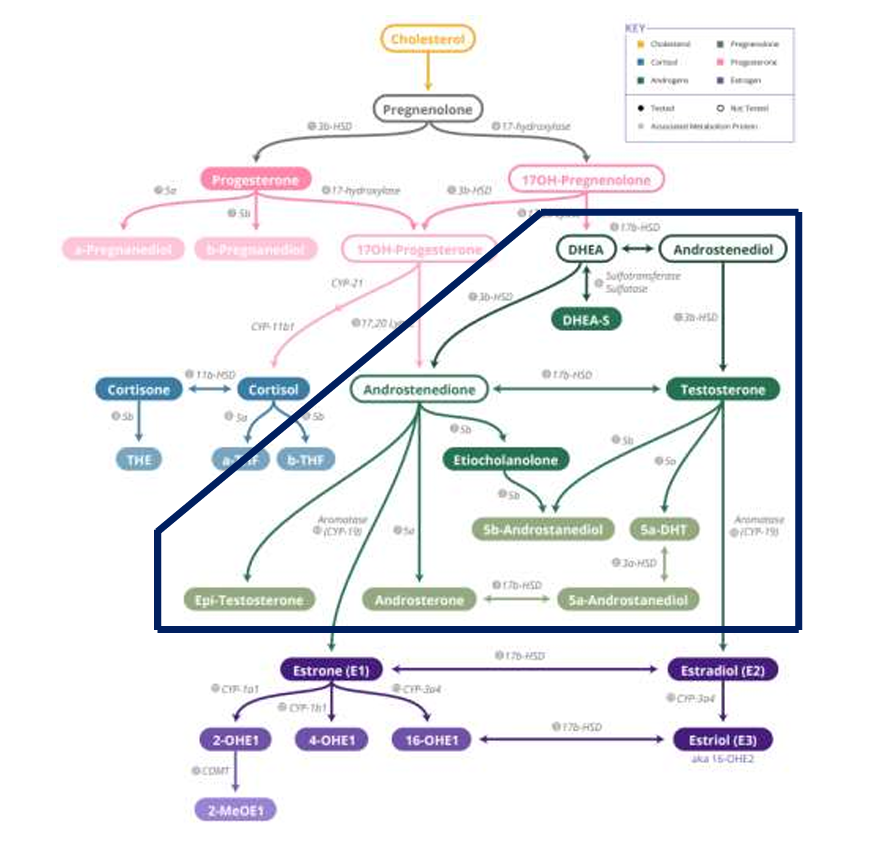
3. Hormones, DHT and the Androgen ('male hormones') Metabolites which Blood Tests Miss
DHT: The usual suspect
You’ve probably heard of DHT (dihydrotestosterone). It’s formed when testosterone is converted by the enzyme 5-alpha reductase.
DHT is more potent than testosterone at the androgen receptor.
In genetically sensitive people, DHT can shrink hair follicles, causing thinning, especially on the crown and temples.
By the way, you can have high DHT and no hair loss, and you can have 'normal' DHT and still lose hair.
Why? Due to:
follicle sensitivity
how and where these androgens are metabolised (cleared)
The Functional Testing Advantage: 5α-Androstanediol
My team and I use a functional test called the DUTCH (Dried Urine Test for Comprehensive Hormones) Plus test to look beyond the standard hormone markers and explore the deeper story behind symptoms, from stress patterns and cortisol rhythms to hormone metabolism and detoxification pathways.
The DUTCH test doesn’t just look at testosterone and DHT. It looks at androgen metabolites, including one that almost no standard blood test will show you: 5α-Androstanediol
5α-androstanediol is a metabolite of 5α-DHT
Research shows that 5α-androstanediol is the best reflection of intracellular production and activity of 5α-DHT. In other words, the potent androgen effect occurs within tissues, not just in the blood. So looking at blood tests alone, may not be helpful in certain cases.
Whilst trichologists and dermatologists play an important role, many women are still left without answers because the deeper drivers of hair loss, hormones, stress physiology, inflammation, metabolic health, nutrient deficiencies, and immune activity, are not always fully explored.
Serum DHT might look 'normal', but if 5α-androstanediol is high, it suggests strong local androgen activity at the tissue level, including hair follicles. This helps explain why some women have 'normal' blood test results, but very real androgen-type hair loss (thinning at the crown/temples, excess facial or body hair, acne).
DUTCH Plus also shows:
Whether your body prefers the 5-alpha pathway (more androgenic, 'potent') vs the 5-beta pathway (less androgenic).
DHEA, testosterone, and their metabolites.
Cortisol rhythm and adrenal function, all vital for stress-linked hair loss.
It gives you a map of androgen behaviour, not just a snapshot and looks beyond just 'hair' hormones.
If you want to book a test with one of my team, book HERE for a free 15-minute consultation.
4. PMOS, Insulin Resistance and Androgen Excess
In PMOS, hair loss and androgen issues often sit on top of insulin resistance. High insulin levels tell the ovaries to make more testosterone, which can:
Convert into DHT
Feed into that more androgenic 5-alpha pathway
Increase 5α-androstanediol activity at the tissue level
On the surface, this might show up as:
Thinning hair on the scalp
Excess hair on the chin, lip, chest, abdomen
Acne and oily skin
My team and I look at:
Fasting glucose and insulin
HbA1c
DUTCH Plus for androgen metabolism (including DHT and 5α-androstanediol)
The goal isn’t just to 'block DHT' but to calm the entire metabolic storm, insulin, inflammation, and androgen excess together.
In essence, even if the blood tests show, no androgens, but you have hair loss that seems more 'androgenic', you may just benefit from a DUTCH plus test. Note, having this test done and being able to interpret with all it's complexities, needs a qualified nutritional therapist.
5. Thyroid, the Birth Control Pill, HRT

Your thyroid is the master regulator of metabolism. Too low, and hair becomes dry, brittle, thin. Too high, and you can get diffuse shedding. We run a full thyroid panel:
TSH
Free T3
Free T4
Reverse T3
Thyroid antibodies (TPO, TGAb)
Thyroid hormone activation also relies on healthy bile. Remember, that no organ, no tissue, no system in your body works alone.
The Pill and HRT: The hidden thyroid link
Many women notice hair changes after starting or stopping:
The oral contraceptive pill
Oestrogen-based HRT
These can raise thyroid binding globulin (TBG) which means more thyroid hormone is bound and less is free and active. Even if your labs look 'normal', your tissues including your follicles may be experiencing a functional thyroid deficit!
Some synthetic progestins in the pill are also androgenic, which can act a bit like testosterone, feed into androgenic pathways (including DHT and 5α-androstanediol) and contribute to hair thinning in susceptible women
So if hair loss began after a contraceptive change or starting HRT, this piece deserves a proper look.
6. Adrenals, Cortisol and Shock
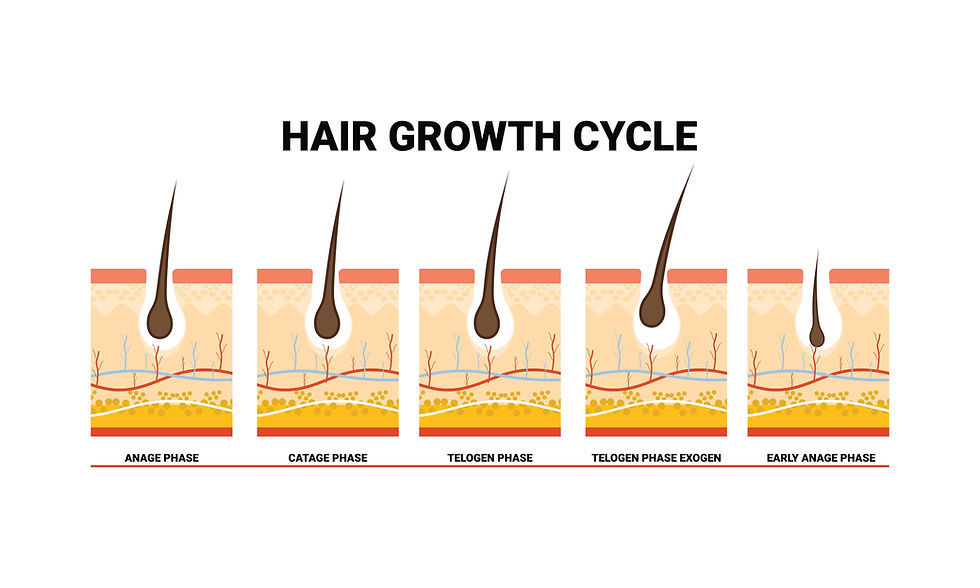
Stress doesn’t just make you 'feel' frazzled and/or overwhelmed; it can also change blood flow, hormones, and nutrient use in the body. Short-term stress can trigger an episode of telogen effluvium.
A shock (grief, surgery, illness, accident, sudden trauma) pushes many hairs into the resting phase and a few months later, you may notice major shedding.
Chronic stress or burnout can:
Flatten or over-activate the cortisol diurnal rhythm
Disrupt thyroid conversion (issue with converting T4 to active T3 hormone)
Alter androgen metabolism
Hijack nutrients away from repair and growth
The DUTCH Plus test tracks cortisol throughout the day, as well as cortisol metabolites, giving insight into the adrenal 'energy' and whether you are in overdrive, underdrive, or simply dysregulated. All these matter to your hair.
Hair loss after:
Bereavement
A break-up or divorce
A car accident
Surgery or hospitalisation
COVID or another major illness
…is extremely common.

The body registers threat and puts 'non-essential' systems (like hair growth) on hold.
In these situations, the answer isn’t just 'more supplements', but more about
Nervous system support
Sleep repair
Gentle, sustainable movement
Restoring safety in the body so it feels able to allocate energy back to growth and repair
Some Rapid Relief Homeopathy
7. Gut Health, Leaky Gut and Inflammation (LPS)
You can eat the perfect diet and still have hair loss if you can’t absorb nutrients. Signs that the gut may be the culprit include:
Chronic bloating
Alternating constipation/loose stools
History of IBS, SIBO, or inflammatory bowel issues
There are two big issues here:
Malabsorption – iron, zinc, protein, B vitamins and fat-soluble vitamins may not be properly absorbed.
Leaky gut and LPS – when the gut lining is compromised, LPS (lipopolysaccharides) from Gram-negative bacteria can cross into the bloodstream, triggering inflammation.
Inflammation is a 'silent hair killer'. It doesn’t always hurt, but it silently stresses follicles, disrupts hormonal signalling and slows growth.
We will use tests where necessary to assess digestion, microbiome, inflammation, infection, short-chain fatty acids and zonulin or other permeability markers where appropriate.
8. Genetics and Ageing: The bit we can’t 'fix'
We also need to be honest, because sometimes, hair loss is genetic. Sometimes it is simply ageing. Follicles have a lifespan. With age:
Oestrogen and progesterone decline
Collagen and elastin reduce
Mitochondrial energy is lower
Hair naturally becomes finer and less dense
You cannot fight ageing but you can work with it. The goal isn’t to 'freeze' time but to make sure your hair loss isn’t being accelerated by things you can change, such as nutrient deficiencies, dysregulated hormones, relentless stress, and gut inflammation.
We aim to separate the modifiable factors (things you can influence) from non-modifiable biology, your genetics, your age, your inherent follicle pattern.
We don't make false promises, actually we are all a team of women practitioners, some of us who have been there or are there.
The Multi-Billion Dollar Hair Industry
Let’s talk about the products and why they often fail.
Women spend bucket loads of money on:
Hair growth shampoos
Serums promising “new follicles”
Supplements with the same three ingredients in 10 different bottles (true story)
DHT-blocking everything
Common active ingredients:
Minoxidil – improves blood flow to follicles, but only works while you use it. Stop, and shedding often returns.
Saw palmetto – may partially block 5-alpha reductase, but doesn’t address why androgens are high or androgen metabolism is skewed.
Caffeine shampoos – mildly stimulating, but very limited evidence for significant regrowth.
The problem isn’t that these are always useless. It’s that they are often used instead of looking at the root causes.
And yes, there are also companies preying on women’s insecurities: promising 'guaranteed regrowth' when the real issue is low ferritin, PCOS, a thyroid 'hit' from the contraceptive pill, or chronic under-eating.
For personalised consultations, Khush is currently seeing existing and returning clients (book here with Khush), and my team is available to support new clients.
To Health!

Comments